Not a Hotel Competition 2026
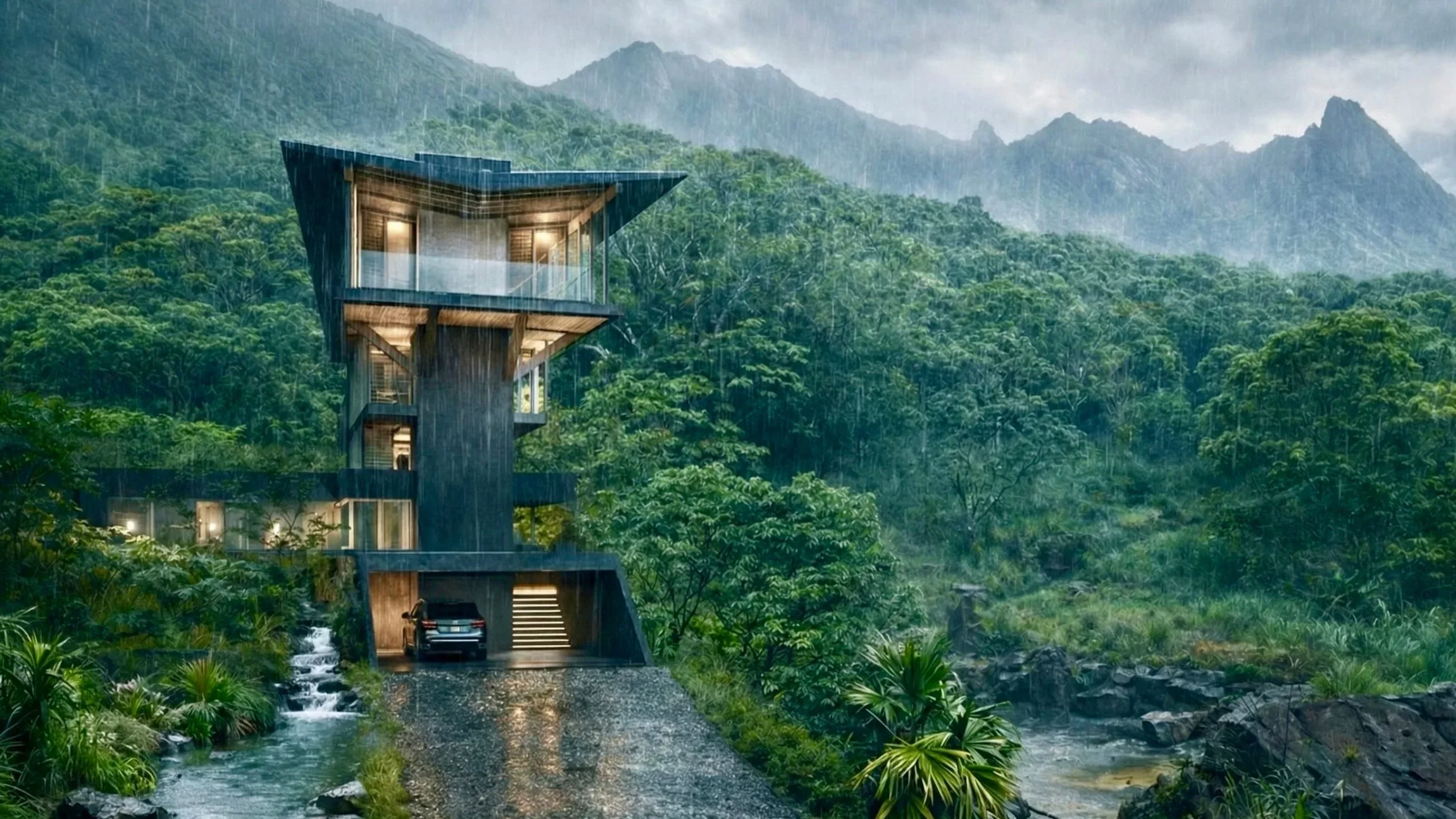
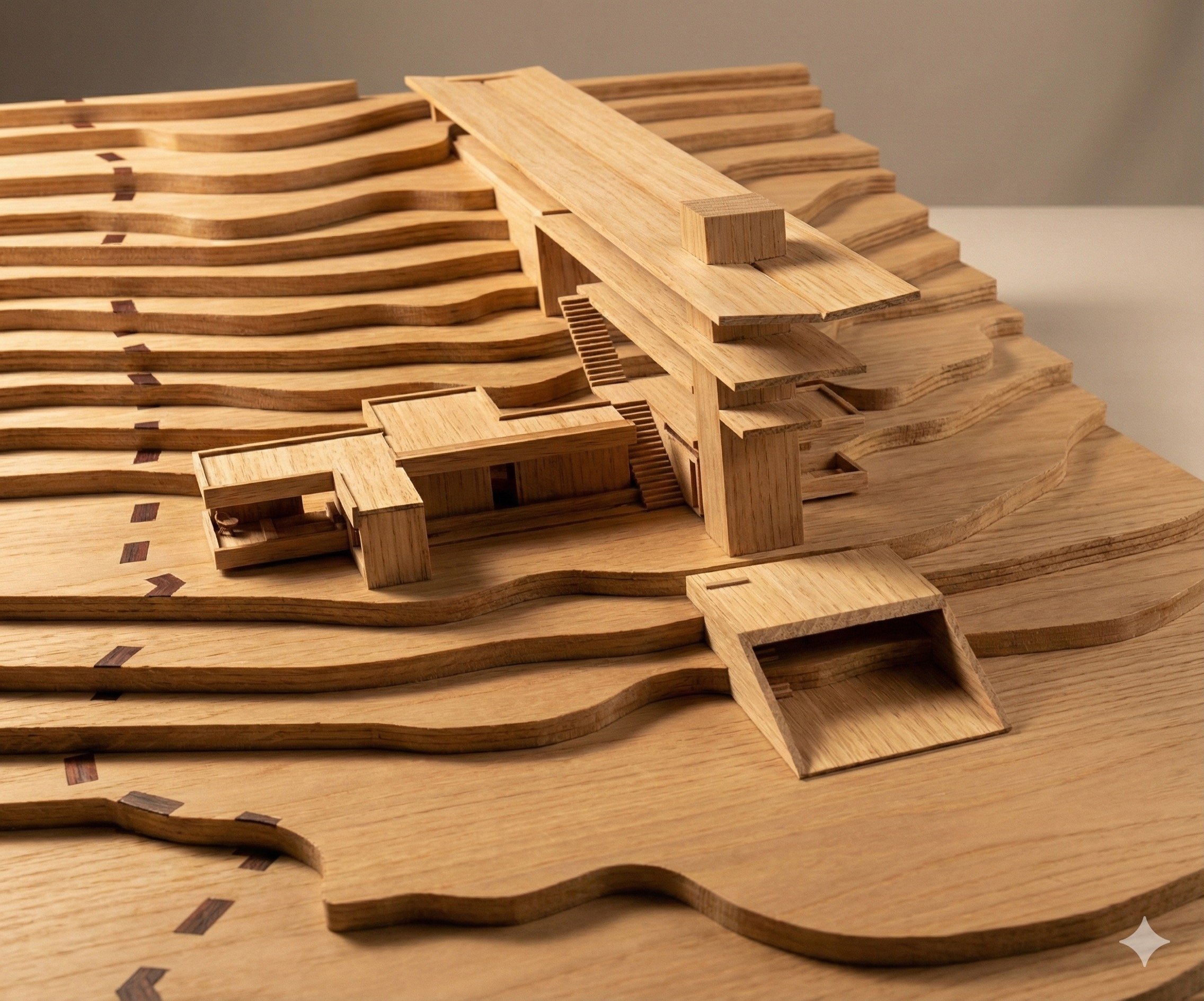
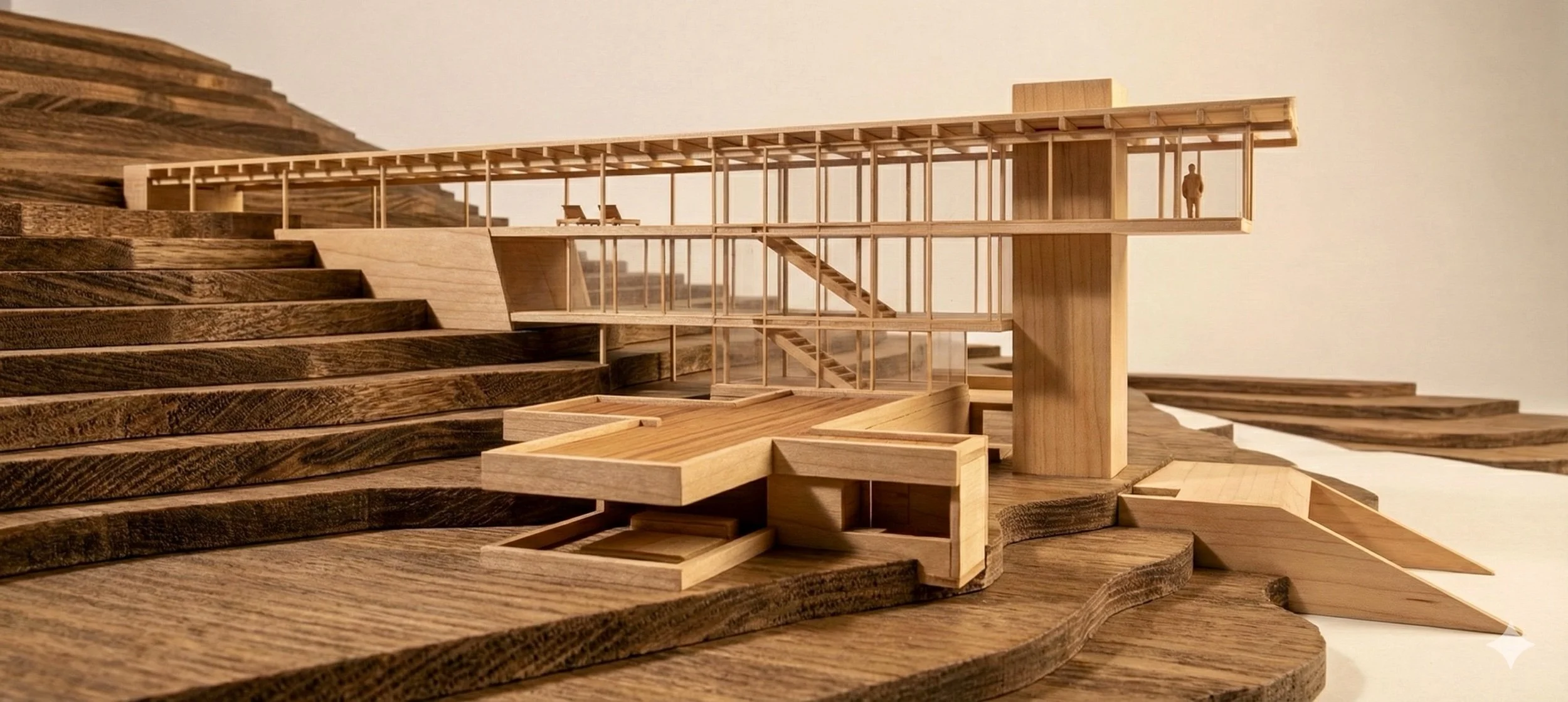
Yakushima Ascent is conceived as a vertical journey through the rainforest, from forest floor to canopy to horizon. Rainfall becomes the project’s organizing element, drawing visitors upward through the forest and shaping both movement and experience.
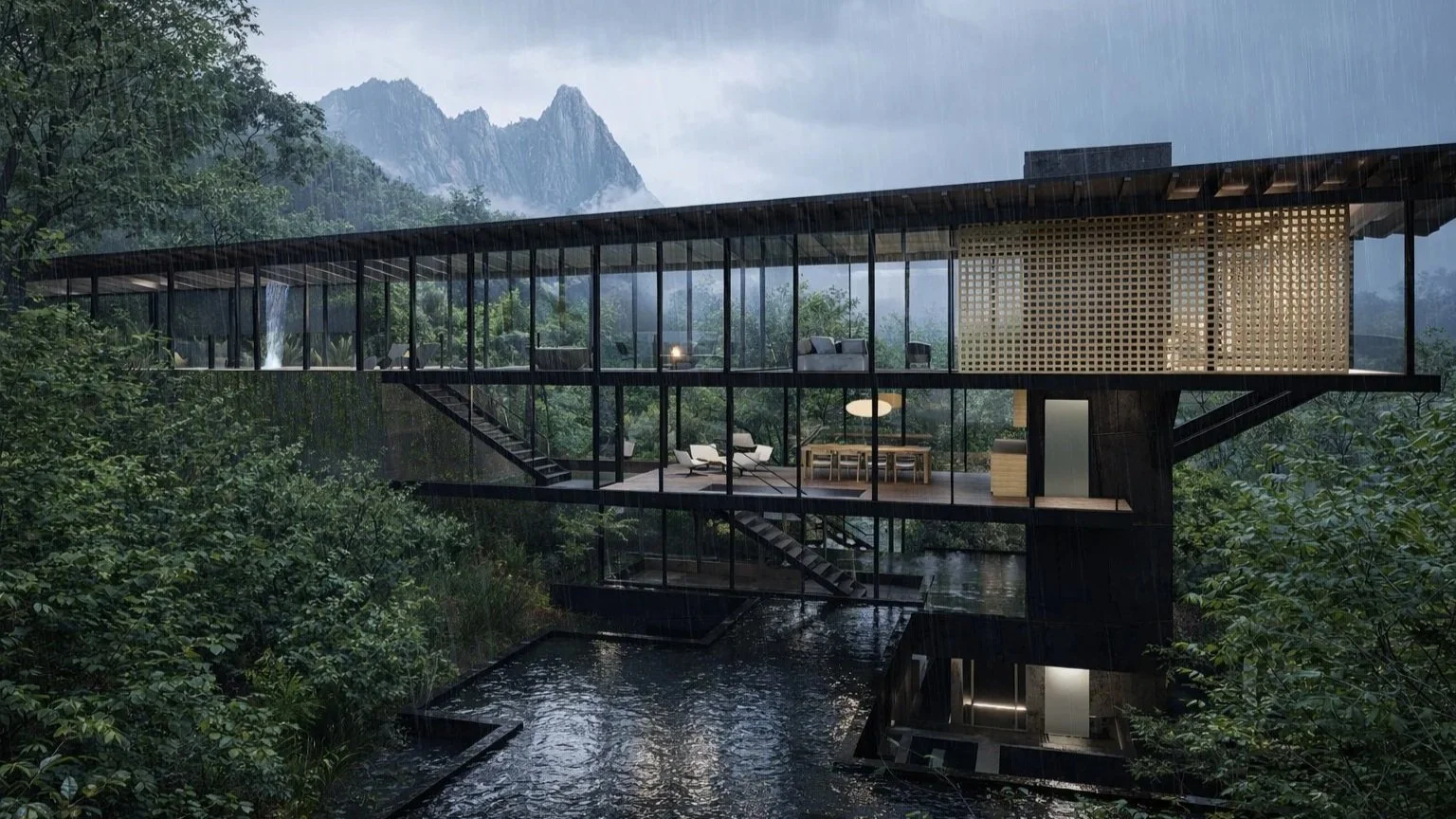
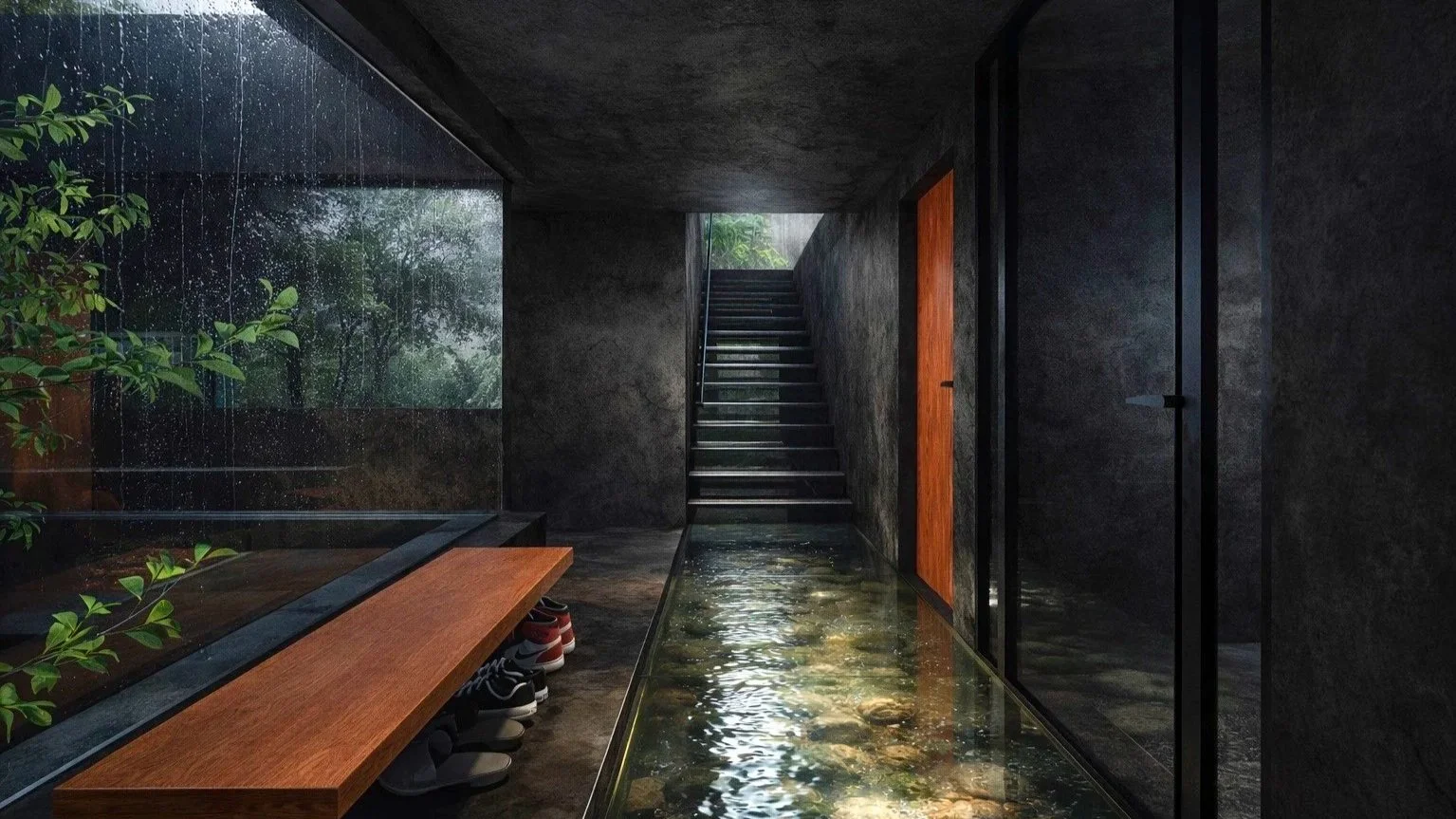
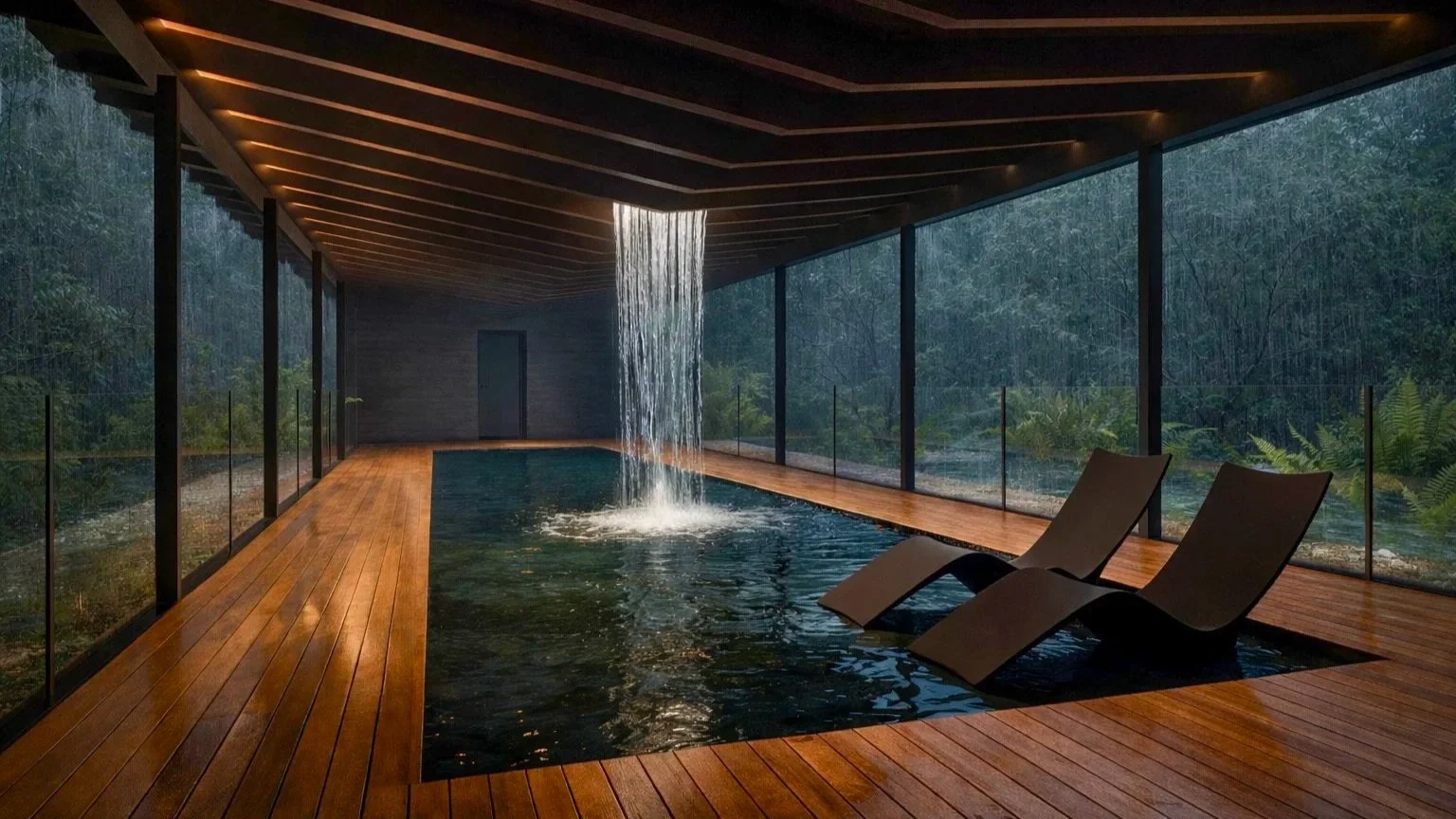
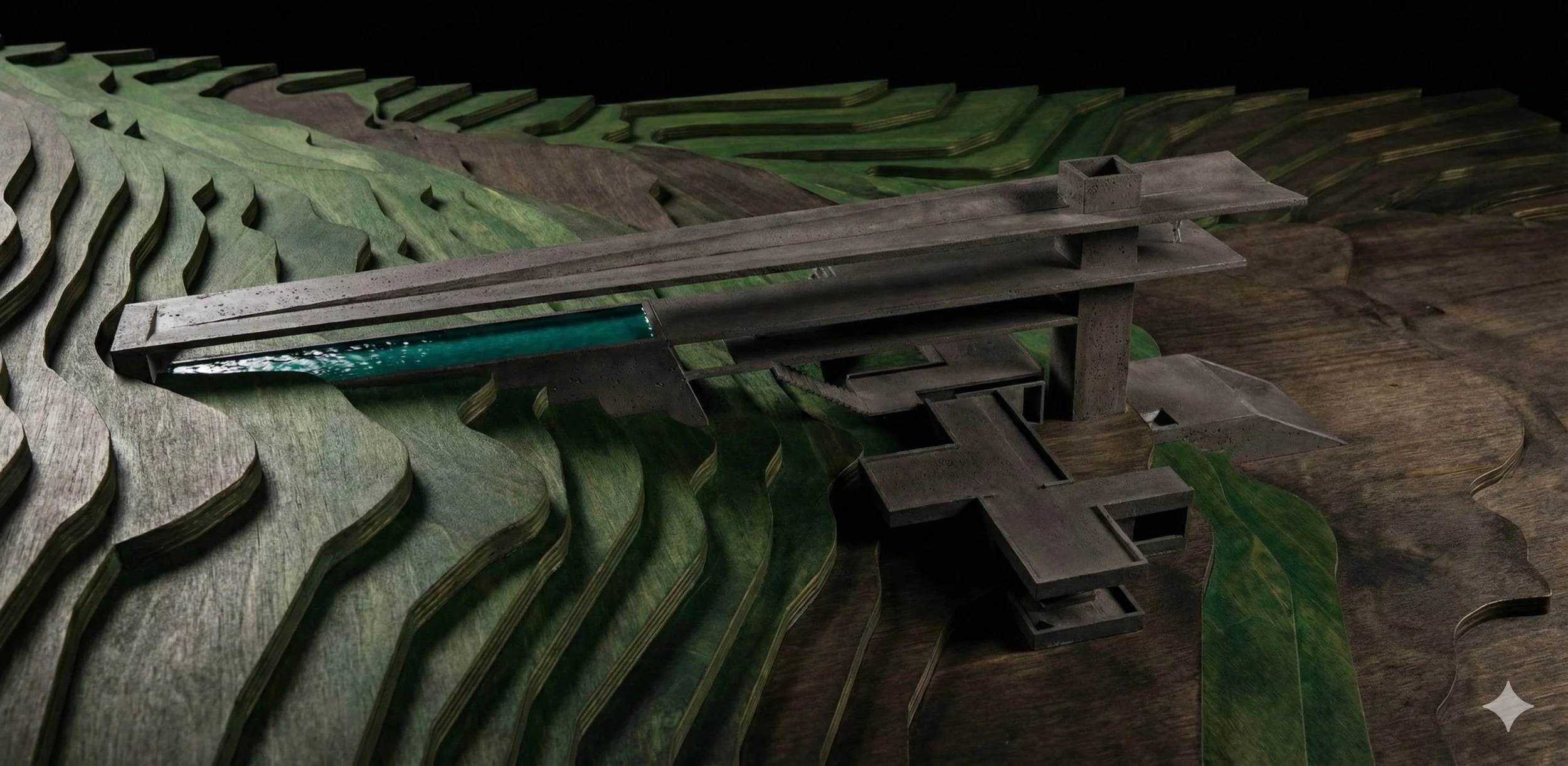
Rainwater is choreographed through two distinct paths. Above, a soaring butterfly roof captures Yakushima’s downpours and directs them into a waterfall that fills an elevated pool, where water overflows to animate the moss-covered concrete base before slipping beneath the building—revealed underfoot as a quiet current that guides the ascent. Below, the concrete roof of the submerged guest suites gathers rainfall into a large, shallow reflecting pool, where water mirrors the forest and sky in moments of calm before becoming animated by rain. As the pool overflows, it spills gently into the surrounding landscape. These two paths converge into a crafted creek that runs along the entry driveway, eventually feeding an existing pond at the heart of the site, anchored by ancient rocks.
Entry with creek below. Adjacent to the entry door is a Genkan Bench, where guests can remove their shoes.
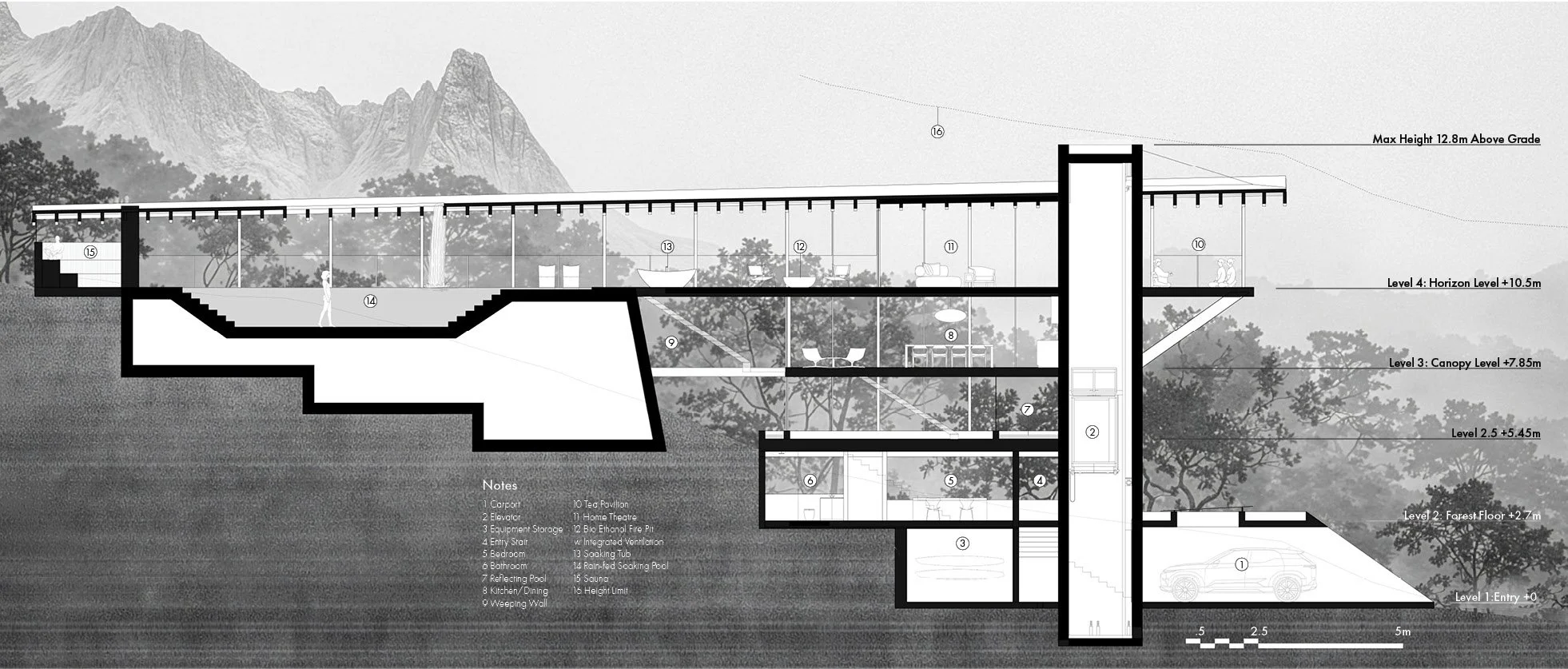
The project is organized around a central reinforced-concrete core that functions as both the primary seismic structure and the building’s vertical infrastructure hub. HVAC, plumbing, electrical, and drainage are consolidated within this core, allowing the perimeter spaces to remain completely open to nature. A compact lift is integrated into the core, ensuring universal accessibility for elderly and disabled guests while supporting efficient housekeeping operations.
The arrival sequence begins in a submerged, open-air carport—a cave-like entry where dark-pigmented concrete echoes the volcanic slate and deep shadows of the Yakushima rainforest. Adjacent to the garage, integrated storage is tucked into the monolithic concrete base, maintaining a clean arrival sequence focused entirely on the ascent. From here, a concrete staircase leads guests to the Forest Floor level, where the guest bedrooms are located.
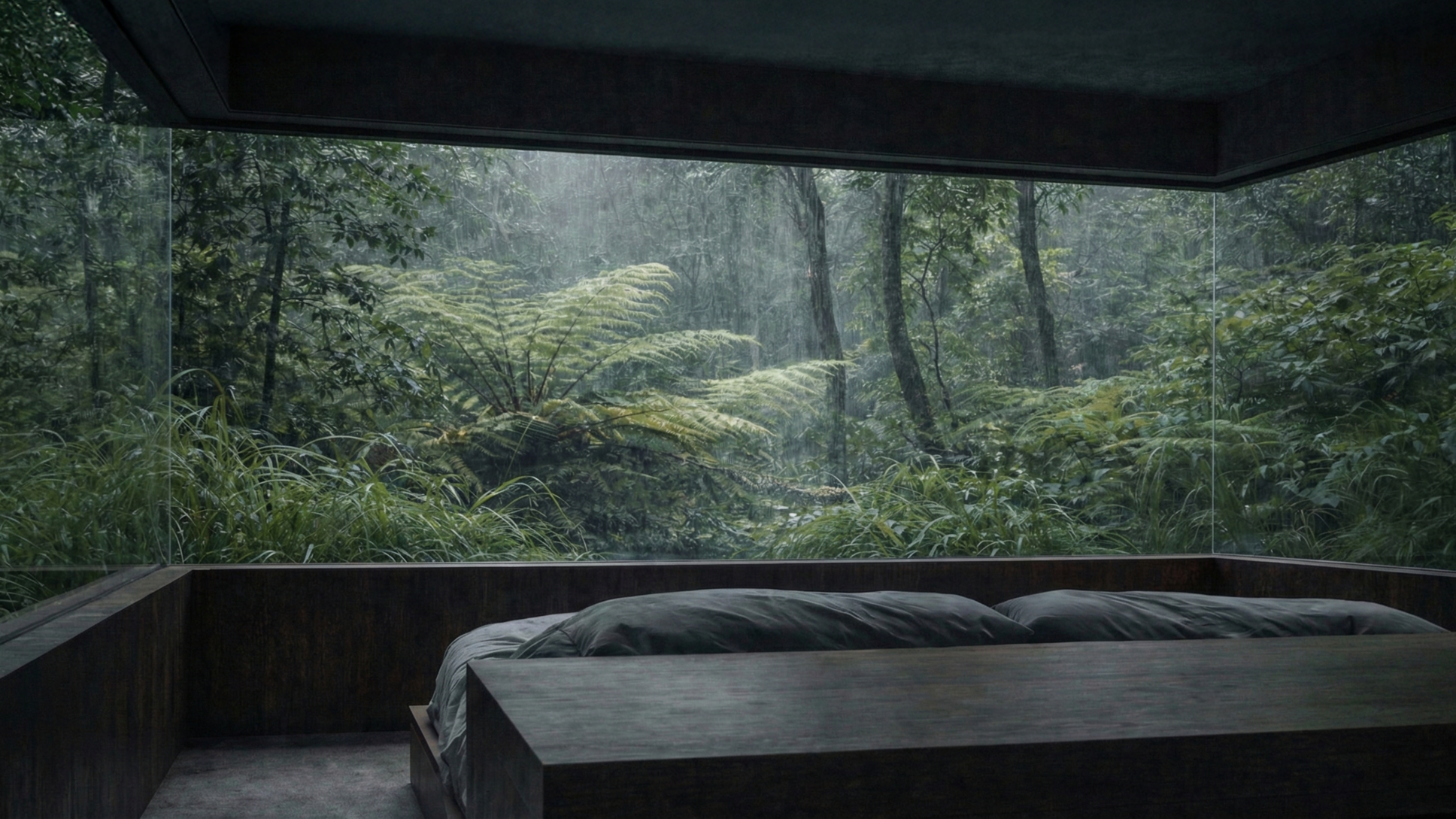
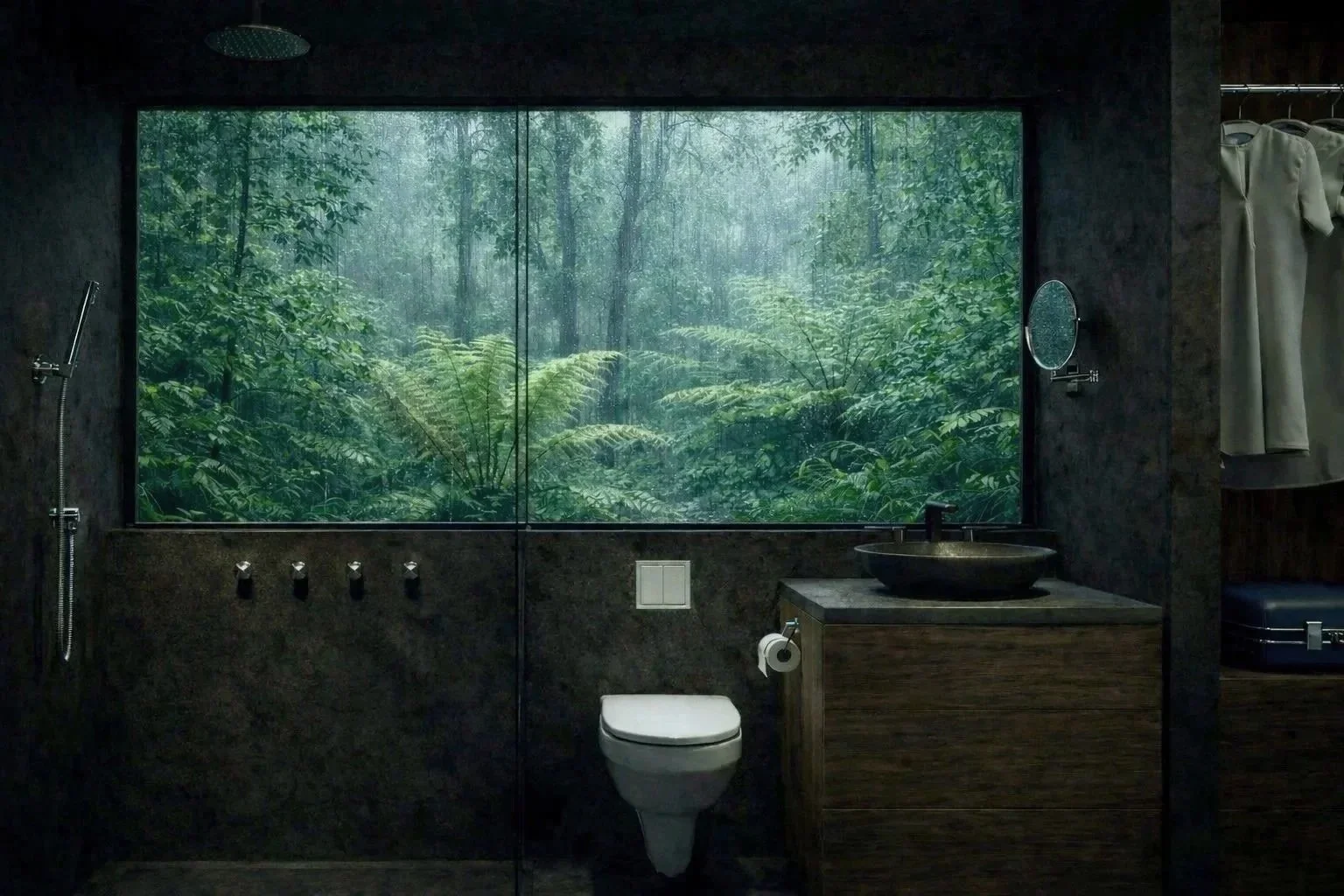
The Forest Floor level houses three guest suites, each designed with an identical layout and relationship to the landscape. This repetition reflects Japanese cultural values of modesty (kenkyo) and equality, ensuring the same experience for every guest. The rooms are semi-submerged, positioning occupants at eye level with ferns, mosses, and grasses of the rainforest floor. A cantilevered roof shelters the sleeping areas, while glass butt-jointed corners dissolve the enclosure and fully immerse guests in the surrounding forest.
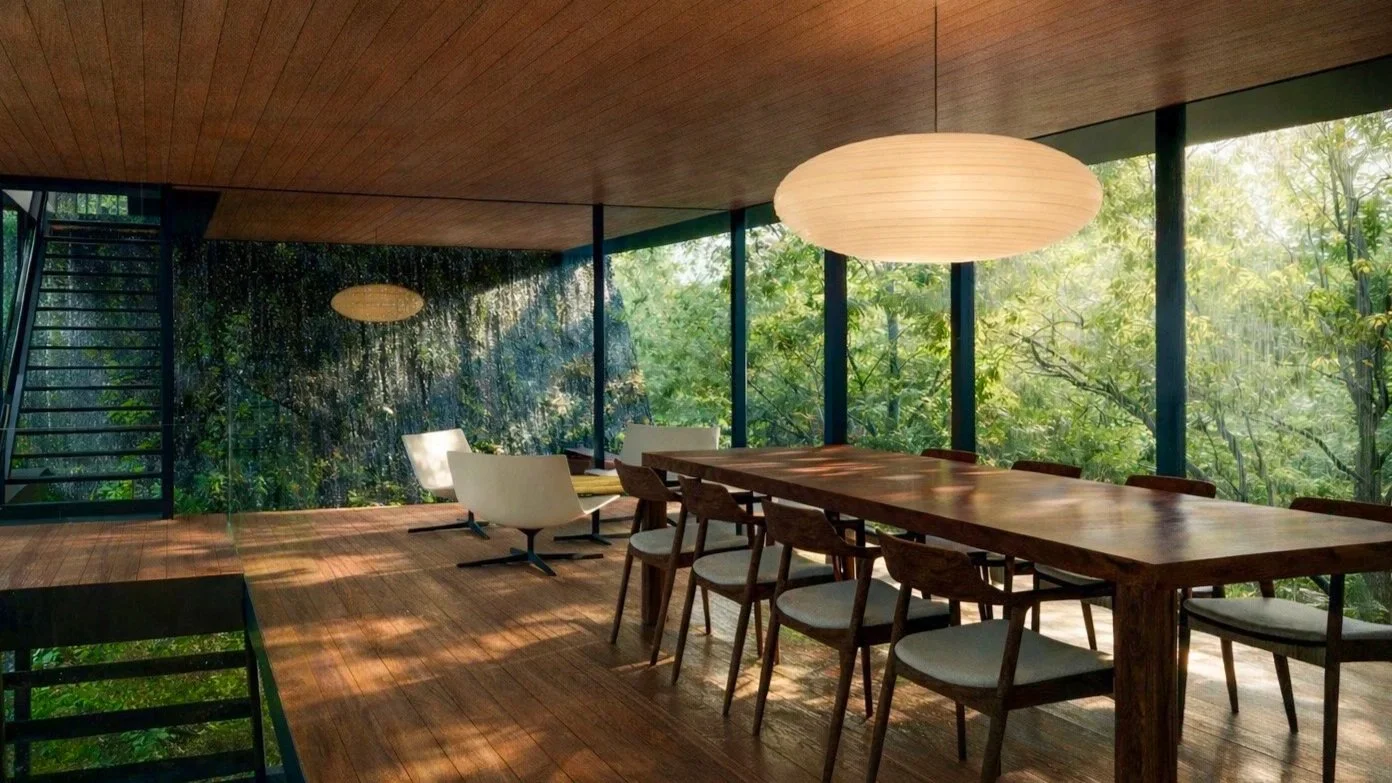
Ascending further, guests arrive at the Canopy Level, which contains the kitchen and a grand eight-person dining table. Here, space is defined by dappled light filtering through the treetops and the rhythmic texture of the canopy. At the far end of the room, a moss-covered, board-formed concrete wall marks the base of the pool above, signaling the next stage of ascent.
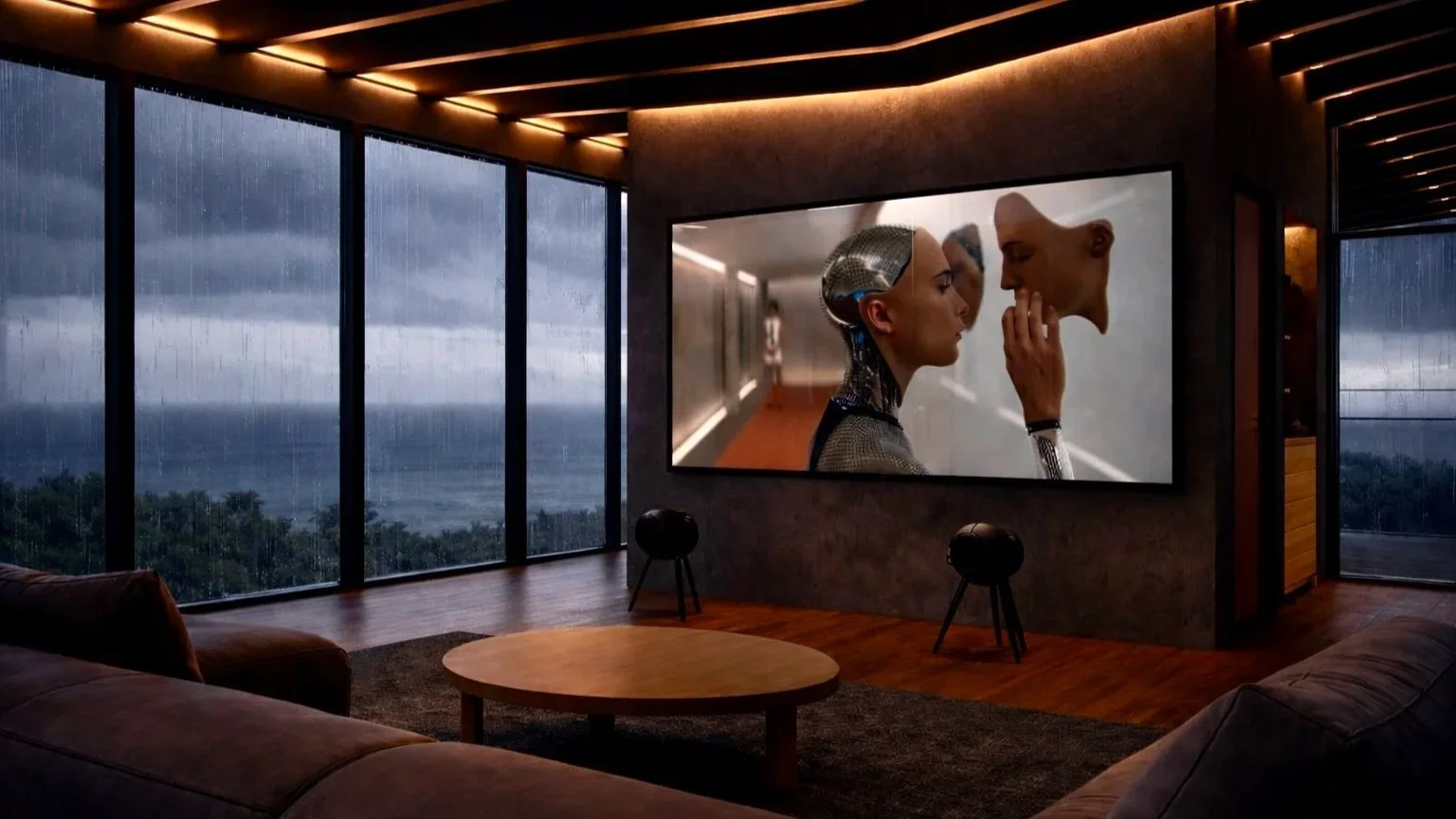
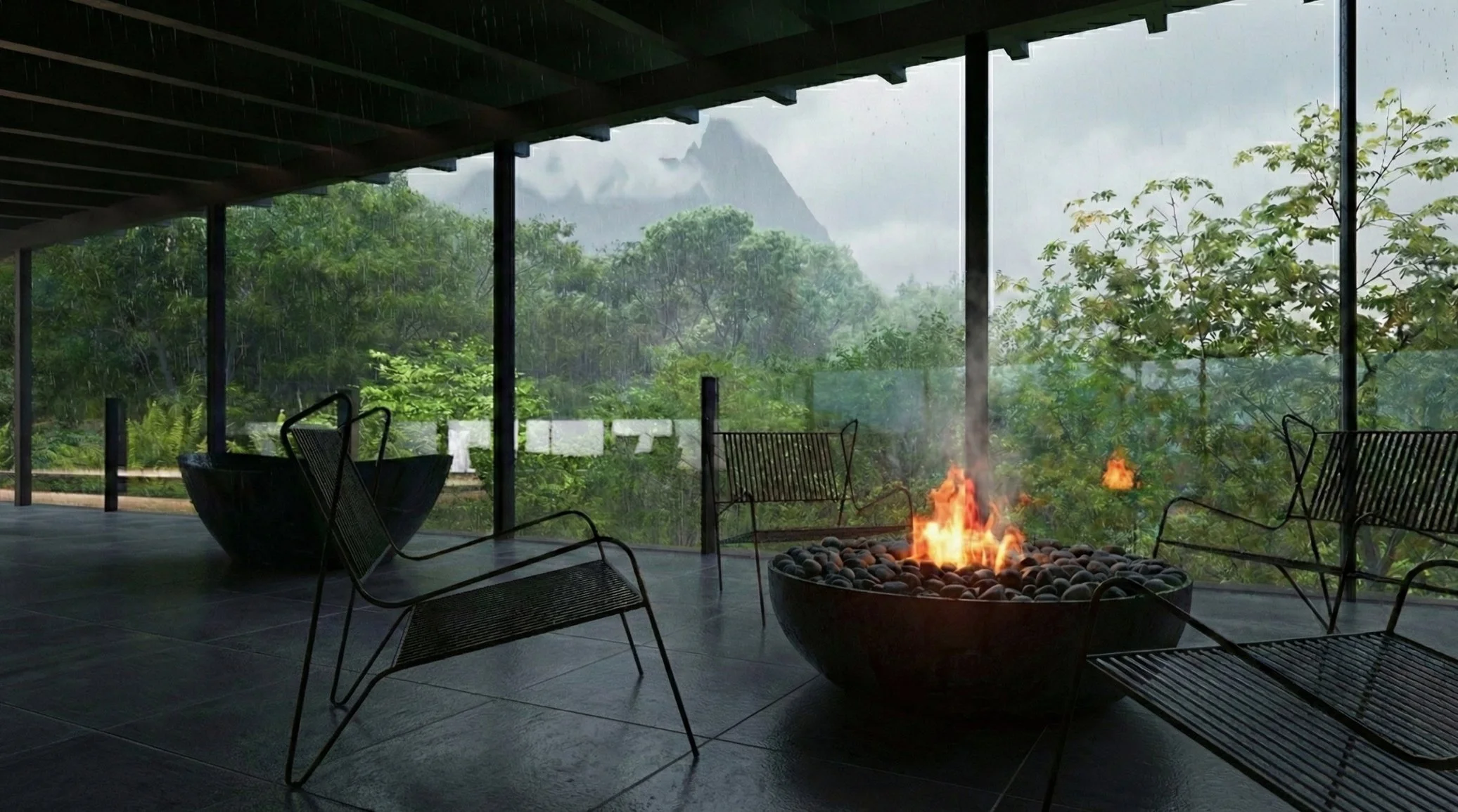
The final ascent leads guests out of the treeline and onto the Horizon Level, where jagged mountains meet the vast blue horizon of the ocean.
This expansive floor houses the living area and sauna complex, anchored back into the hillside by a long rain-fed lap pool.
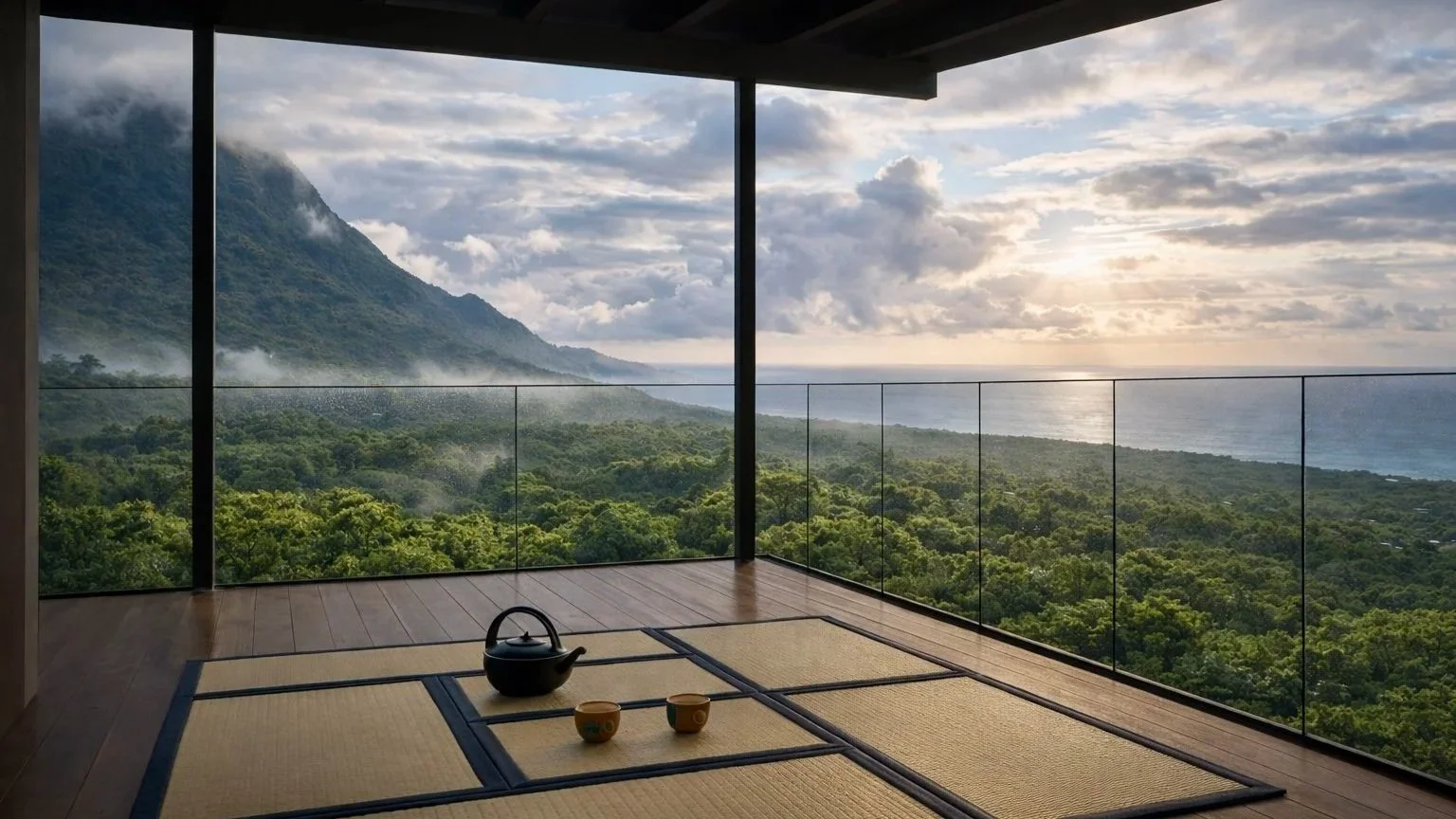
The vertical journey culminates at a dramatic cantilevered deck dedicated to the tea ceremony—a sanctuary of light and air. Floating high above the canopy, the open-air tea room frames the infinite horizon. Protected by the deep overhang of the roof, the space invites the sounds, scents, and shifting atmosphere of the rainforest into the ritual, offering a final moment of release.